Businesses these days need many teams to work together to reach their goals. The marketing team works with the sales department, product managers work with developers, customer support shares information with engineering teams and executives need information from every department to make decisions.
Business teams have to work to succeed but this is not always easy. Teams might use tools, have different ways of working, talk to each other in different ways and have trouble sharing information. These problems can cause delays, confusion people doing the work and less productivity.
Artificial Intelligence is changing how companies deal with these problems. Artificial Intelligence tools are helping teams work together better do tasks automatically communicate better and make better decisions with up- to-date information. By spending a lot of time organizing work and looking for information employees can focus on important work that helps the business grow.
This article looks at how Artificial Intelligence tools help teams work better together with the things they bring, how they can be used in different departments and the best ways to put them in place successfully.
Understanding Cross-Team Productivity
Cross-team productivity refers to the efficiency and effectiveness with which different departments work together to achieve organizational objectives.
When teams collaborate successfully, they:
- Share information efficiently
- Align goals and priorities
- Reduce duplication of work
- Solve problems faster
- Deliver projects on time
- Improve customer experiences
However, many organizations face common barriers to cross-functional collaboration, including:
- Information silos
- Communication gaps
- Manual reporting processes
- Lack of visibility into project progress
- Inconsistent documentation
- Difficulty coordinating across locations and time zones
AI tools help eliminate many of these obstacles by creating smarter workflows and improving information accessibility throughout the organization.
The Growing Role of AI in Workplace Collaboration
Artificial Intelligence has become really smart. Now Artificial Intelligence can understand what people are saying, look at a lot of information, figure out what it means, summarize what people talked about and help people at work with the things they do every day.
Artificial Intelligence has become really smart. Now Artificial Intelligence can understand what people are saying, look at a lot of information, figure out what it means, summarize what people talked about and help people at work with the things they do every day.
Organizations are increasingly integrating AI into collaboration tools because it helps employees:
- Work faster
- Access information instantly
- Communicate more effectively
- Make data-driven decisions
- Reduce administrative workloads
As remote and hybrid work environments become more common, AI has become a critical component of successful teamwork across departments.
Improving Communication Between Teams
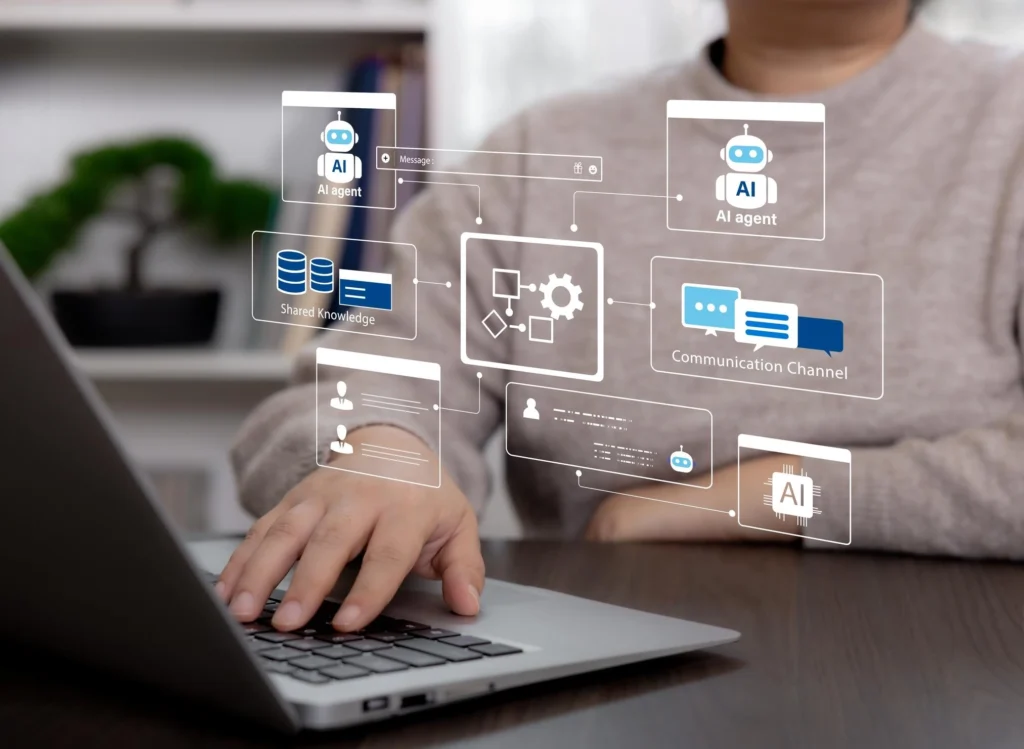
One of the biggest productivity challenges organizations face is communication.
Teams often communicate through emails, messaging platforms, project management systems, and video meetings. Important information can become scattered across multiple channels.
AI tools help improve communication by:
Summarizing Conversations
AI can automatically summarize:
- Meeting discussions
- Email threads
- Chat conversations
- Project updates
Instead of reviewing lengthy discussions, team members can quickly understand key decisions and action items.
Real-Time Translation
Global organizations often have employees who speak different languages.
AI-powered translation tools help teams communicate effectively by translating messages, documents, and meeting transcripts in real time.
This reduces language barriers and improves collaboration among international teams.
Intelligent Message Prioritization
Employees frequently receive hundreds of messages and notifications.
AI systems can identify urgent communications, prioritize important tasks, and reduce information overload, helping teams focus on what matters most.
Breaking Down Information Silos

Information silos occur when valuable knowledge remains isolated within specific departments.
For example:
- Sales teams collect customer feedback.
- Support teams identify recurring issues.
- Marketing teams analyze customer behavior.
- Product teams develop solutions.
When these insights remain disconnected, organizations lose opportunities to improve performance.
AI tools help centralize information by:
Creating Knowledge Hubs
AI-powered knowledge management systems gather information from:
- Documents
- Emails
- Databases
- CRM platforms
- Project management software
Employees can quickly find relevant information without searching across multiple systems.
Intelligent Search Capabilities
Traditional search functions often return irrelevant results.
AI-powered search engines understand context and intent, helping employees locate accurate information faster.
This saves time and ensures that teams work with the latest available knowledge.
Automating Repetitive Administrative Tasks
Many cross-team workflows involve repetitive administrative work.
Examples include:
- Scheduling meetings
- Updating project statuses
- Creating reports
- Assigning tasks
- Organizing documents
These activities consume valuable time that could be spent on strategic work.
AI automation reduces these burdens by:
Automating Task Management
AI can automatically:
- Create tasks from meeting notes
- Assign responsibilities
- Set deadlines
- Send reminders
- Track project progress
This ensures accountability while reducing manual effort.
Generating Reports Automatically
Instead of manually compiling data from multiple sources, AI tools can generate:
- Performance reports
- Project summaries
- Sales updates
- Marketing analytics
- Customer service metrics
Teams gain faster access to insights and can make decisions more quickly.
Enhancing Project Management
Cross-functional projects often involve multiple stakeholders, deadlines, and dependencies.
Without proper coordination, projects can experience delays and confusion.
AI-powered project management tools that improve productivity by:
Predicting Project Risks
AI can analyze project data to identify potential risks such as:
- Missed deadlines
- Resource shortages
- Budget overruns
- Workflow bottlenecks
Managers receive early warnings and can take corrective action before problems escalate.
Resource Optimization
AI helps organizations allocate resources efficiently by analyzing:
- Employee workloads
- Team availability
- Project requirements
- Skill sets
This ensures that the right people are assigned to the right tasks.
Workflow Recommendations
AI can suggest workflow improvements based on historical project performance.
Teams can continuously optimize their processes and improve collaboration outcomes.
Improving Decision-Making Across Departments
Effective decisions require accurate and timely information.
Organizations often struggle because data is spread across multiple systems and departments.
AI helps by:
Consolidating Data Sources
AI platforms can combine information from:
- CRM systems
- Marketing tools
- Financial software
- Customer support platforms
- Business intelligence systems
Decision-makers gain a unified view of organizational performance.
Delivering Actionable Insights
AI identifies trends, patterns, and opportunities that may not be immediately obvious.
Examples include:
- Customer behavior trends
- Sales forecasting
- Market opportunities
- Product performance insights
These insights enable faster and more informed decisions.
Predictive Analytics
AI forecasting tools help teams anticipate future outcomes based on historical data.
This supports proactive planning rather than reactive decision-making.
Supporting Remote and Hybrid Teams
Remote work has really changed the way we work together.
When people from teams work on a project it can be tough to get everything done when they are in different places and work, at different times.
This is because remote work makes digital collaboration very important.
Remote work is when people do their job from home or other places that are not the office and this has made digital collaboration a big part of our work.
AI tools help remote teams by:
Providing Virtual Assistants
AI assistants can:
- Schedule meetings
- Answer questions
- Retrieve information
- Create summaries
- Manage reminders
Employees spend less time on administrative tasks and more time on productive work.
Maintaining Project Visibility
AI dashboards provide real-time updates on:
- Task completion
- Team performance
- Project milestones
- Resource utilization
Everyone remains informed regardless of location.
Facilitating Asynchronous Collaboration
AI-generated summaries allow team members in different time zones to stay updated without attending every meeting.
This improves flexibility while maintaining alignment.
Strengthening Customer-Focused Collaboration
Customer satisfaction depends on effective collaboration among multiple departments.
For example:
- Marketing attracts leads.
- Sales converts prospects.
- Support resolves issues.
- Product teams improve offerings.
AI improves customer-focused collaboration by:
Sharing Customer Insights
AI systems aggregate customer feedback from various channels and distribute relevant insights across teams.
Everyone gains a better understanding of customer needs.
Identifying Common Issues
AI analyzes support tickets, reviews, and conversations to identify recurring problems.
Teams can collaborate on solutions more effectively.
Personalizing Customer Experiences
AI helps departments coordinate personalized communications and recommendations based on customer behavior and preferences.
Enhancing Innovation and Creativity
Contrary to common misconceptions, AI does not replace human creativity.
Instead, it supports innovation by reducing routine work and providing valuable insights.
AI can help teams:
- Generate ideas
- Analyze market trends
- Explore customer preferences
- Identify emerging opportunities
- Test concepts more efficiently
By handling repetitive tasks, AI gives employees more time to focus on creative problem-solving and strategic initiatives.
Challenges of Using AI for Cross-Team Productivity
Despite its advantages, AI implementation comes with challenges.
Data Quality Issues
AI systems rely on accurate data.
Poor-quality information can lead to incorrect recommendations and insights.
Organizations must maintain clean and reliable data sources.
Employee Adoption
Some employees may hesitate to use AI tools due to concerns about complexity or job displacement.
Proper training and communication are essential for successful adoption.
Integration Difficulties
Organizations often use multiple software platforms.
Integrating AI tools across existing systems may require additional planning and resources.
Privacy and Security Concerns
AI systems often process large amounts of organizational data.
Businesses must ensure compliance with security standards and data privacy regulations.
Best Practices for Implementing AI Collaboration Tools
To maximize productivity benefits, organizations should:
Start with Clear Objectives
Define specific goals such as:
- Improving communication
- Reducing manual work
- Enhancing reporting
- Accelerating decision-making
Choose the Right Tools
Select AI solutions that align with business needs and integrate with existing workflows.
Train Employees
Provide comprehensive training to help teams understand how AI tools support their work.
Monitor Performance
Track key productivity metrics to evaluate the effectiveness of AI initiatives.
Continuously Optimize
AI systems improve over time when organizations regularly review workflows and incorporate feedback.
The Future of AI-Driven Cross-Team Productivity

AI technology continues to evolve rapidly.
Future workplace AI systems will likely provide:
- More advanced collaboration assistance
- Improved predictive analytics
- Greater workflow automation
- Smarter decision support
- Enhanced personalization
As AI becomes more integrated into daily operations, organizations will experience faster communication, stronger collaboration, and increased productivity across departments.
Businesses that embrace AI-powered teamwork today will be better positioned to compete in increasingly complex and fast-moving markets.
Conclusion
AI tools are really helping people work together better by making it easier for them to talk to each other, getting rid of information that is not shared, doing tasks that have to be done over and over, making project management better and helping people make decisions.
These technologies make it possible for different parts of a company to work together easily no matter where they are, what they do or how the company is set up.
As more companies have people work from home and have to deal with work, AI tools will help people work together even more.
Companies that use AI tools in a way can make their teams work better together, get projects done faster, make customers happier and help their business grow in a good way.
AI tools do not replace people working together, they actually help people work together better by letting them focus on what they’re good at, which is solving problems, making things better and achieving what they want to achieve.

Mehreen Mushtaq is a skilled content writer dedicated to creating high-quality, engaging, and SEO-focused blogs. She specializes in strategic keyword usage, search intent, and informative content that connects with readers while helping websites strengthen their visibility and rankings in search results.